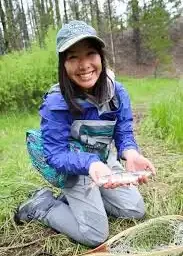
April is Autism Acceptance month, and the Be What You Don’t See leader is North Carolina fishing guide, Taylor Farfour. Taylor speaks with iFishiBelong Advocacy committee member, Russell James, about both of their experiences as anglers with autism and how, in only five years, Taylor went from being a ski instructor and novice fly fisher to head guide at Maggie Valley Fly Shop.
As fly fishing friends who share an autism diagnosis, Taylor and Russell discuss how fly fishing is the perfect “hyper obsession”, and what allies and the industry can do to bring more autistic folks into the sport.
I was never in it to teach the best of the best. I just want to get other people who have never fly fished before into it.
Taylor was born and raised in Western North Carolina to a family that loved the outdoors but never fished. One day, she found a toy rod and reel on the bank of a nearby lake, borrowed a hook from a neighbor, dug up a worm and caught a blue gill. This was the start of what she terms her early “obsession” with fishing. There was no YouTube, so Taylor taught herself. Eventually, an interest in skiing eclipsed fishing, and Taylor moved to Colorado, becoming a skiing instructor.
In the summer of 2020, in the midst of a COVID lockdown, Taylor was biking along the Eagle River and spotted a guy fly fishing. “That looks fun,” she thought. “I like fishing, I think I might like that.” She shared her interest with a fellow skier who was also a fly fishing guide. “I caught my first brown trout, and I was obsessed.”
Russell: “As autistic folks, we get obsessed with things and hyper obsessed, and we call them ‘special interests.’
Another of Taylor’s special interests is conservation. Her instinct to protect the environment led directly to her becoming a fly fishing guide.
Taylor had been an outdoor skiing and snowboarding instructor for 16 years when COVID hit. She lost her career overnight and began spending twelve hours a day outdoors riding her bike and fishing along the way. Between hours on the water, watching YouTube videos, and talking to other anglers online, her fly-fishing learning curve escalated exponentially.
She found a six-month guide school at Colorado Mountain College that was accessible and affordable. Taylor: “It was everything from how to row, how to cast, how to teach…it gave me the stepping stones that the ski industry had already given me in a certain other tactic.”
Taylor earned her certification and moved to the East Coast of North Carolina. She went looking for women’s fly fishing gear at the Maggie Valley Fly Shop, and when the shop owner was ringing up her purchases, Taylor asked if they were hiring. She was hired on the spot, starting at the lowest tier and working her way up.
The fly shop staff worked with her, putting her on trips with walk-ins and beginners.
During this period and even before, Taylor was also working with the May Fly Project, an organization that mentors foster kids through fly fishing.
Taylor: “I was never in it to teach the best of the best. I just want to get other people who have never fly fished before into it.”
Along with the benefits of hyper focus, her autism led her to be very organized. For example, she set up a system for rental equipment that allows her to know where every boot and wader is at any time.
After three years, Taylor is now the head guide.
- Follow @flyfishingfarfour on Instagram
- Hire Taylor as a guide through Maggie Valley Fly Shop
- Tell your fishing friends about Taylor, especially if they are traveling to North Carolina
When asked what meaningful allyship looks like, especially for those who want to support autistic anglers, Taylor said:
- Accept when someone says they are autistic. Don’t question it.
- Realize that autism is a medical diagnosis.
- The autism spectrum is not a straight line but more like a color wheel – individuals with autism have a mix of traits and behaviors
Russell asked Taylor how another autistic person could get into the guiding scene. This was her advice and experience:
- Put hours in on the water
- Invest in certification
- Guiding is teaching, so the ability to teach is really important
- Connect with a fly fishing community for support and knowledge
- Make accommodations for your autism like taking breaks to rest, hydrate, and eat
- Comfortable clothing is very important for people with autism. Taylor and Russell have identified the brands that make clothing that feels right like Korkers, Miss Mayfly, Howler Brothers, Wild Fly, and Rep Your Water.
Because of autism, I have a very strong sense of justice and what is right and what is wrong. Preserving the natural world is the whole reason I got into guiding because I wanted more people to love fly fishing - the more people love the sport, the more they want to protect it.
The 2026 iFishiBelong “Be What You Don’t See” campaign highlights leaders breaking barriers in the fishing industry. Each month, we will feature individuals who challenge conventions and inspire change with passion and resilience, motivating the next generation of anglers to create their paths and “be what they don’t see.” By highlighting these trailblazers, we aim to inspire broader participation and show that leadership roles in the fishing industry are accessible to everyone, creating a more inclusive vision of success.